
Duration
11 Days
Activity
Trekking
Best Season
March-May/Sept-Dec
Accomodation
Teahouse
Destination
Everest Region
New Offers !!! 2026 New Booking Open With Heavy Discount Offers


direct call @ oR whatsApp
 Iconic Summary
Best Offered Features
Overviews
Embark on the Makalu Base Camp Trek, a challenging yet immensely rewarding expedition that unveils the hidden treasures of the Himalayas. This remote and less-explored journey commences in the picturesque town of Tumlingtar, nestled in eastern Nepal. From there, the trail meanders through a tapestry of landscapes, including verdant forests, terraced farmlands, and traditional Sherpa villages. As you ascend, the terrain undergoes a remarkable transformation, revealing panoramic vistas of towering peaks, cascading waterfalls, and pristine alpine meadows.
A pinnacle of this trek is the Makalu Barun National Park, a protected sanctuary celebrated for its unparalleled biodiversity. Within its boundaries, you'll encounter a spectrum of habitats, from lush subtropical forests to the lofty domains of snow-capped mountains. This sanctuary serves as a haven for rare and elusive species, including the red panda, snow leopard, and a myriad of avian wonders. As the trek elevates towards the base camp, it presents high-altitude challenges while offering awe-inspiring glimpses of Makalu's majestic summit.
The Makalu Base Camp Trek is an immersive and unforgettable adventure, providing a unique opportunity to behold the raw beauty of the Himalayas and forge connections with the local culture. Undoubtedly, it's a physically and mentally demanding expedition, yet the rewards reaped from this endeavor are immeasurable.
Highlights
Scenic Diversity: The Makalu Base Camp Trek offers an extraordinary tapestry of landscapes, encompassing lush lowland forests, high alpine meadows, and glacial expanses. Each ecosystem harbors its own distinctive flora and fauna, ensuring a captivating journey for nature enthusiasts.
Remote and Less Crowded: Unlike the well-trodden paths of Everest Base Camp or Annapurna Circuit, the Makalu region remains relatively uncharted, making it an ideal choice for those yearning for a secluded and authentic trek. Along the trail, you'll encounter remote villages, affording you the opportunity to engage with local communities and immerse yourself in their timeless way of life.
Makalu Barun National Park: This expedition guides you through the pristine realms of Makalu-Barun National Park, a protected sanctuary revered for its astounding biodiversity. Within its untouched wilderness dwell rare and endangered species, including the elusive snow leopard and the charismatic red panda. For nature enthusiasts and wildlife photographers, this sanctuary is a veritable paradise.
Spectacular Mountain Vistas: Your journey culminates at the Makalu Base Camp, where you'll be greeted by breathtaking panoramas of the world's fifth-highest peak, Mount Makalu (8,485 meters or 27,838 feet). The vista also encompasses neighboring giants such as Lhotse, Everest, and Baruntse.
Cultural Immersion: Inhabited by diverse ethnic groups, including the Rai, Sherpa, and Limbu communities, the Makalu region offers an enriching cultural experience. Trekking through these villages allows you to delve into their rich cultures, traditions, and daily routines. The genuine warmth and hospitality of the locals infuse an invaluable cultural dimension into your trekking odyssey.
Embark on the Makalu Base Camp Trek, where adventure meets cultural exploration, and pristine nature blends with awe-inspiring landscapes. It's a journey that will etch unforgettable memories into your heart.
Additional Highlights
High Passes: The trek involves crossing challenging high passes, such as the Shipton La Pass (4,220 meters) and Keke La Pass (4,150 meters). These passes offer exhilarating views and an adventurous element to the trek.
Varied Flora and Fauna: The Makalu region is a hotspot for biodiversity. You'll encounter a wide range of plant species, from subtropical forests to alpine meadows. The area is also home to an array of wildlife, including Himalayan tahr, langur monkeys, and various species of birds.
River Valleys: Trekking along the Arun River and its tributaries exposes you to the rugged beauty of river valleys. The trails pass through lush forests, terraced fields, and small settlements, providing a picturesque backdrop.
Mystical Lakes: The trek brings you close to stunning glacial lakes like Barun Pokhari and Salpa Pokhari. These serene bodies of water are surrounded by dramatic landscapes, making for great spots to rest and take in the natural beauty.
Photographer's Paradise: The diverse landscapes, pristine nature, and towering peaks offer photographers endless opportunities to capture breathtaking shots. From sunrise and sunset views to the play of light on snow-covered mountains, every moment is a frame-worthy scene.
Rich Indigenous Culture: The local communities along the trek route have preserved their unique customs and traditions. This gives trekkers a chance to interact with locals, learn about their ancient practices, and witness traditional ceremonies.
Trail less Traveled: The remoteness of the Makalu region ensures a quieter and less commercialized trekking experience. You're likely to encounter fewer trekkers on the trail, allowing you to connect more intimately with nature and the surroundings.
Adventure and Challenge: The Makalu Base Camp Trek is physically demanding, making it an excellent choice for those seeking a challenging trekking experience. The elevation gain, rough terrain, and unpredictable weather conditions add an element of adventure to the journey.
Opportunities for Extension: For those with extra time and a thirst for more exploration, the Makalu region offers various side trips and extensions. These include venturing deeper into the Barun Valley or attempting lesser-known peaks in the vicinity.
Trekking Route Destination
The Makalu Base Camp Trek takes you through a captivating journey in the Makalu-Barun National Park, located in the eastern part of Nepal. This remote and less-traveled route is known for its stunning natural beauty, diverse landscapes, and unique cultural experiences. Here's a breakdown of the trekking route and its main destinations:
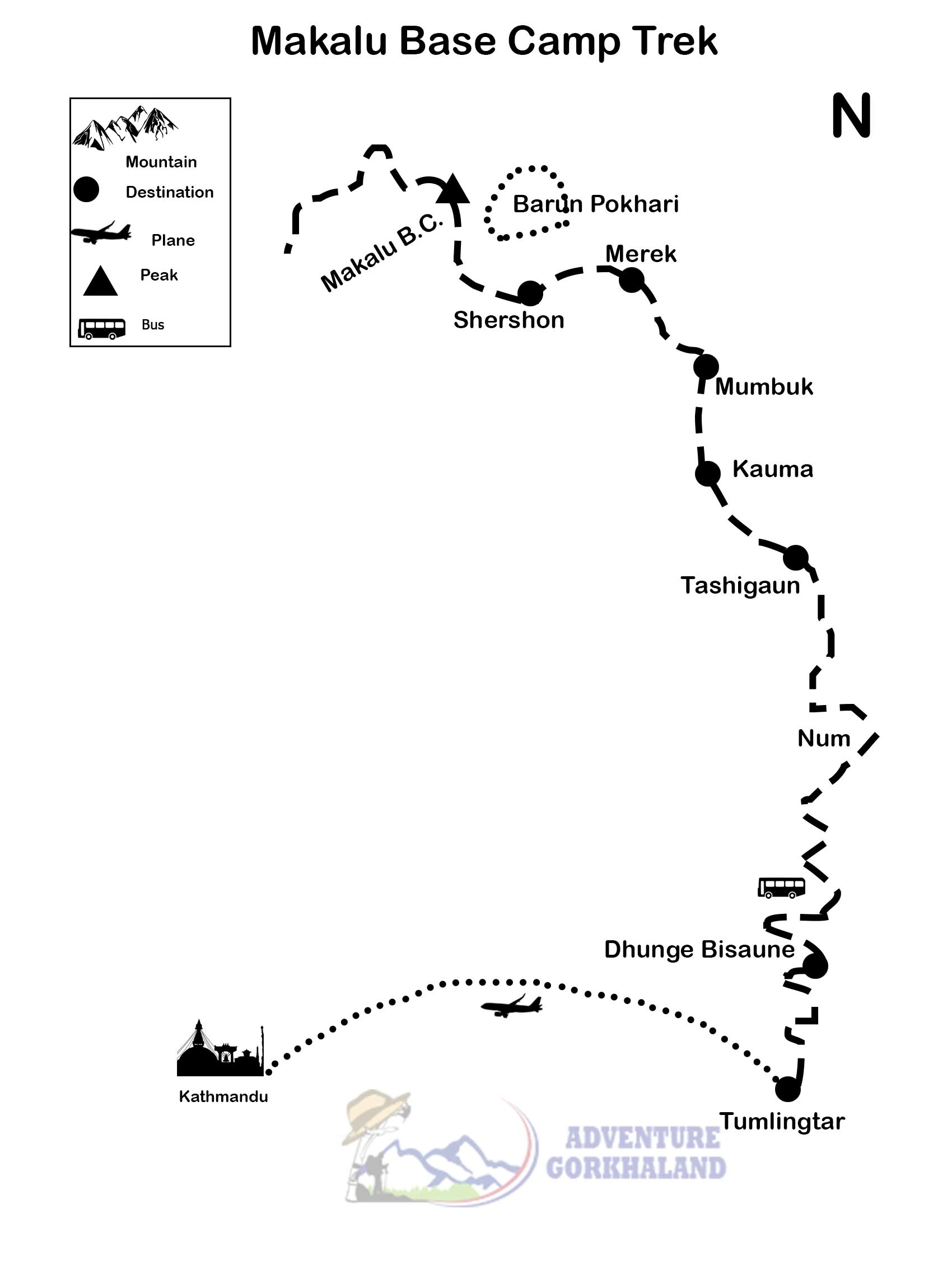
Tumlingtar (410 meters): The trek usually begins with a flight from Kathmandu to Tumlingtar, a town in the eastern Terai region of Nepal. This serves as the starting point for your adventure.
Chichira (1,980 meters): The trek commences with a gradual ascent to Chichira, a small village surrounded by lush forests. This is the initial introduction to the diverse flora and fauna of the region.
Num (1,560 meters): The trail continues through rhododendron and bamboo forests, leading to the village of Num. This section involves descending to the Arun River and then ascending to Num, offering beautiful views along the way.
Seeduwa (1,540 meters): From Num, you'll descend to the Arun River once more before ascending to Seduwa. This village is inhabited by the Rai community and offers a glimpse into the local way of life.
Tashigaon (2,070 meters): The trail gradually climbs through terraced fields and forests to Tasgaon, a Sherpa village. Here, you'll start to experience the rich Sherpa culture and their warm hospitality.
Khongma (3,560 meters): As the trail steepens, you'll make your way to Khongma, passing through rhododendron and oak forests. This is the last major settlement before entering higher altitudes.
Dobate (3,500 meters): Trekking through dense forests, you'll reach Dobate, a scenic campsite surrounded by rhododendrons and tall trees. This is a good place for acclimatization.
Yangle Kharka (3,600 meters): Continuing the ascent, you'll reach Yangle Kharka, an open area offering panoramic views of the surrounding mountains.
Langmale Kharka (4,410 meters): The trail leads to Langmale Kharka, where you'll find yak pastures and breathtaking views of Makalu and Chamlang peaks.
Makalu Base Camp (4,870 meters): The highlight of the trek, the Makalu Base Camp, rewards you with awe-inspiring views of Mount Makalu and its neighboring peaks. The campsite is situated in a dramatic alpine landscape surrounded by towering peaks and glaciers.
The return journey generally follows the same route, allowing you to retrace your steps and appreciate the scenery from a different perspective. The Makalu Base Camp Trek offers an immersive experience in both nature and culture, making it a remarkable adventure for trekkers seeking a more remote and challenging expedition.
Sub Peak
There are two sub-peaks of Makalu that can be seen on the Makalu Base Camp Trek:
Chomo Lonzo: This is the taller of the two sub-peaks, at 7,804 meters. It is located just north of Makalu, and is separated from the main summit by a narrow saddle.
Makalu II: This sub-peak is 7,678 meters tall, and is located to the west of Makalu. It is the second highest sub-peak of Makalu, and is a popular destination for climbers.
In addition to these two sub-peaks, there are a number of other peaks that can be seen on the Makalu Base Camp Trek, including:
Ama Dablam: This iconic peak is located to the north of Makalu, and is one of the most popular mountains to climb in the Himalayas.
Pumori: This peak is located to the east of Makalu, and is a popular destination for climbers acclimatizing for higher peaks.
Thamserku: This peak is located to the south of Makalu, and is a challenging climb that offers stunning views of the surrounding mountains.
Trek Facts
Here are some trek facts for the Makalu Base Camp Trek:
Difficulty: The Makalu Base Camp Trek is considered to be a moderate to difficult trek. The trails are often steep and rocky, and there is a significant amount of altitude gain.
Best time to go: The best time to go on the Makalu Base Camp Trek is during the spring (March to May) and autumn (September to November). The weather is mild and sunny during these times, with clear skies and no rain.
Accommodation: There are tea houses along the route of the Makalu Base Camp Trek where you can stay overnight. The tea houses are basic but comfortable, and they offer hot meals and drinks.
Permits: You will need to obtain a trekking permit from the Nepal Tourism Board before you can go on the Makalu Base Camp Trek. You can also get a permit from the Makalu Barun National Park.
Cost: The cost of the Makalu Base Camp Trek varies depending on the route you choose, the time of year you go, and the level of comfort you want. However, you can expect to pay around $1,000 to $2,000 for the entire trek.
Here are some additional things to keep in mind when planning your Makalu Base Camp Trek:
Altitude sickness: Altitude sickness is a common problem on high altitude treks like the Makalu Base Camp Trek. It is important to acclimatize gradually to the altitude by taking rest days and drinking plenty of fluids.
Wildlife: There are a variety of wildlife in the Makalu Barun National Park, including snow leopards, red pandas, and musk deer. Be sure to be aware of your surroundings and make noise when you are trekking to avoid startling any animals.
Weather: The weather in the Himalayas can change quickly, so it is important to be prepared for anything. Bring layers of clothing so you can adjust to the temperature changes.
Physical fitness: The Makalu Base Camp Trek is a challenging trek, so it is important to be physically fit before you go. You should be able to walk for several hours a day in mountainous terrain.
History
The Makalu Base Camp Trek is a relatively new trek, with the first recorded ascent of Makalu taking place in 1954. The first person to reach Makalu Base Camp was a Sherpa named Ang Tshering, who was part of the American expedition led by Riley Keegan.
The Makalu Base Camp Trek became more popular in the 1970s and 1980s, as more and more people began to explore the Himalayas. The trek is now one of the most popular trekking routes in Nepal, and it offers stunning views of Makalu, the fifth highest mountain in the world.
The Makalu Base Camp Trek is a challenging trek, but it is also a rewarding one. The trek takes you through some of the most beautiful and remote parts of Nepal, and it offers the chance to experience the culture and history of the region.
Here is a brief history of the Makalu Base Camp Trek:
1954: The first ascent of Makalu is made by an American expedition led by Riley Keegan. Ang Tshering is the first person to reach Makalu Base Camp.
1970s and 1980s: The Makalu Base Camp Trek becomes more popular as more and more people explore the Himalayas.
1990s: The Makalu Barun National Park is established, which helps to protect the environment and culture of the region.
2000s: The Makalu Base Camp Trek continues to grow in popularity, and it becomes one of the most popular trekking routes in Nepal.
2010s: The Makalu Base Camp Trek is affected by the Nepal Earthquake of 2015, but it recovers and continues to grow in popularity.
2020s: The Makalu Base Camp Trek is affected by the COVID-19 pandemic, but it is expected to recover and continue to grow in popularity in the coming years.
The Makalu Base Camp Trek is a beautiful and challenging trek that offers the chance to experience the culture and history of Nepal. It is a great way to see some of the most beautiful mountains in the world, and it is a trek that you will never forget.
How Do You Enjoy The Makalu Base Camp Trek ?
Embarking on the extraordinary Makalu Base Camp Trek is a riveting adventure that captivates both the intrepid traveler and the nature enthusiast. This trek takes you through the untouched landscapes of the Makalu-Barun National Park, where pristine biodiversity and cultural encounters await. Traversing through diverse ecosystems, from lush forests to alpine meadows, the journey culminates at the awe-inspiring Makalu Base Camp, offering unparalleled vistas of the towering Mount Makalu and its neighboring peaks. The remote charm of this less-traveled route ensures an authentic experience, connecting you with local communities and their fascinating traditions. To fully relish this trek, equip yourself with sturdy gear, prepare for the physical demands of high passes, and revel in the joy of capturing breathtaking shots of the sublime landscapes.
For those seeking an exceptional adventure, the Makalu Base Camp Trek promises a sensory odyssey through nature's finest offerings. Nestled within the heart of the Makalu-Barun National Park, this trek unravels a tapestry of landscapes, from verdant river valleys to the exhilarating heights of high mountain passes. As you tread through this remote trail, embrace the enriching encounters with diverse flora and fauna, including the elusive snow leopard and vibrant rhododendrons. The pinnacle of the trek, the Makalu Base Camp, opens a window to an ethereal world of icy giants, offering photographers a symphony of visual marvels. Remember, proper preparation and a guide are paramount to maximize your enjoyment and ensure a safe passage through this extraordinary journey.
Why Trek To Makalu Base Camp Trek ?
Embarking on the Makalu Base Camp Trek is a choice to transcend the ordinary and immerse oneself in the extraordinary. This trek, nestled within the pristine expanse of the Makalu-Barun National Park, beckons adventure seekers to traverse untouched landscapes teeming with biodiversity. The allure lies in its remoteness, providing an authentic experience away from crowds, where the majestic Mount Makalu, world's fifth-highest peak, commands attention. The journey unveils a kaleidoscope of environments – from subtropical forests to alpine meadows – offering both seasoned trekkers and nature enthusiasts an intimate rendezvous with nature's splendor. This trek invites you to partake in cultural exchanges with local communities, relish unparalleled mountain vistas, and leave footprints on trails less traveled, making it an unparalleled odyssey for those who seek to forge an indelible connection with both the Earth's beauty and their own adventurous spirit.
How To Trek Makalu Base Camp Trek ?
Trekking the Makalu Base Camp Trek necessitates a strategic approach to ensure a successful and gratifying journey. Start by securing necessary permits, such as the Makalu-Barun National Park entry permit and the TIMS (Trekkers' Information Management System) card. Given the trail's challenging nature, it's crucial to prioritize physical fitness, endurance, and altitude acclimatization. Pack essential gear like sturdy hiking boots, layered clothing, a reliable sleeping bag, and trekking poles to navigate diverse terrains and variable weather conditions. Opting for a seasoned local guide ensures safety, insightful cultural interactions, and a seamless experience navigating the trail's intricacies.
Begin the trek from Tumlingtar, gradually ascending through various villages like Num, Tashigaon, and Yangle Kharka. Respect the principle of gradual altitude gain to acclimate effectively, and adhere to the guidance of your guide for a comfortable and secure experience. Capture spectacular moments on camera, but remember to also embrace the journey, from encounters with the diverse flora and fauna to immersive cultural exchanges with local communities. As you reach the Makalu Base Camp, relish the awe-inspiring panoramic views, but prioritize safety and respect for the environment by adhering to Leave No Trace principles. Completing the trek, retrace your steps to Tumlingtar, cherishing memories of this exceptional adventure that bridges natural wonder with personal accomplishment.
How can we make this trek more effective?
Expert Guides: We provide experienced and knowledgeable local guides that can significantly enhance the trek. Guides can share insights about the region's culture, history, flora, and fauna, enriching trekkers' understanding of the surroundings.
Customized Itineraries: We offer flexible itineraries that cater to trekkers' preferences, fitness levels, and time constraints can ensure a more tailored and effective experience. This includes options for acclimatization days, side trips, and variations in routes.
Proper Acclimatization: Our company incorporates acclimatization days into the itinerary, allowing trekkers to adapt to the altitude gradually. This helps prevent altitude-related issues and contributes to a more successful and enjoyable trek.
Quality Accommodations: We ensure comfortable and hygienic accommodations in teahouses along the route is crucial. Well-rested trekkers are better equipped to enjoy the journey and achieve their trekking goals.
Healthy Meals: We provide balanced and nutritious meals that cater to different dietary preferences and restrictions that can keep trekkers energized throughout the journey. Hygienic food preparation practices are essential to avoid any health issues.
Safety Measures: We Prioritize safety by hiring trained and certified guides, as well as having a well-stocked first aid kit and communication devices, by ensuring that trekkers are well taken care of during any unexpected situations.
Environmental Conservation: By promoting responsible trekking practices we follow Leave No Trace principles that can help protect the fragile Himalayan ecosystem for future generations.
Porter Support: We offer porter services that can alleviate the physical burden on trekkers, allowing them to fully enjoy the trek without the added strain of carrying heavy loads.
Best Season To Go Makalu Base Camp Trek ?
The best time to go on the Makalu Base Camp Trek is during the spring (March to May) and autumn (September to November). The weather is mild and sunny during these times, with clear skies and no rain. The trails are also dry and dusty, making for a more comfortable trek.
The winter (December to February) can be cold and snowy, making the trek more challenging. The monsoon season (June to August) is also not ideal for trekking, as it is often rainy and humid.
Here is a more detailed breakdown of the weather conditions in each season:
Spring (March to May): This is the most popular time to go on the Makalu Base Camp Trek. The weather is mild and sunny, with average temperatures ranging from 15 to 25 degrees Celsius (59 to 77 degrees Fahrenheit). The trails are dry and dusty, making for a comfortable trek.
Autumn (September to November): The weather is also good during the autumn season, with average temperatures ranging from 10 to 20 degrees Celsius (50 to 68 degrees Fahrenheit). The trails are dry and dusty, and the views of the surrounding mountains are spectacular.
Winter (December to February): The winter can be cold and snowy at higher altitudes, with average temperatures ranging from 0 to 10 degrees Celsius (32 to 50 degrees Fahrenheit). The trails can be icy and slippery, making the trek more challenging. However, the winter can also be a beautiful time to visit the Himalayas, as the mountains are often covered in snow.
Monsoon (June to August): The monsoon season is not ideal for trekking in the Himalayas, as it is often rainy and humid. The trails can be muddy and slippery, and the visibility can be poor. However, if you are looking for a challenge, you can trek in the monsoon season. Just be sure to be prepared for the wet and humid conditions.
Ultimately, the best time to go on the Makalu Base Camp Trek depends on your personal preferences and fitness level. If you are looking for a comfortable and easy trek, the spring or autumn seasons are the best time to go. If you are looking for a challenge, you can trek in the winter or monsoon season.
In summation, the Makalu Base Camp Trek stands as an exceptional odyssey, inviting intrepid souls to explore the unspoiled heart of Nepal's rugged magnificence. This less-frequented path unfurls through the resplendent landscapes of the Makalu-Barun National Park, where a captivating tapestry of ecosystems, from luxuriant forests to pristine alpine meadows, culminates at the awe-inspiring base camp of Mount Makalu. This expedition represents an exquisite fusion of natural marvels and profound cultural engagement, granting trekkers the privilege of interacting with local communities, observing age-old traditions, and feasting their eyes upon breathtaking panoramas of soaring peaks.
While the Makalu Base Camp Trek does necessitate a commendable level of physical readiness and preparation, owing to its demanding terrain and high altitudes, the rewards reaped are immeasurable. From close encounters with elusive wildlife to heartfelt connections with the gracious hospitality of indigenous residents, this trek becomes a voyage of self-discovery and communion with both the natural world and the local culture. With meticulous planning, the expert guidance of seasoned professionals, and an adventurous spirit, trekkers will undoubtedly find themselves captivated by the untamed beauty and serenity of this hidden jewel nestled within the Himalayan embrace.
Cost Include
Cost Exclude
Itinerary
Upon your arrival in Kathmandu, you will be transferred to your hotel where you'll spend the night. Rest and recover from your journey, and if time permits, you can explore the bustling streets of Thamel.
Take an early morning flight to Tumlingtar, where you'll be driven to Chichila. The day's trek to Num involves passing through picturesque landscapes. Stay overnight in Num.
Descend through terraced fields, cross the Barun River, and ascend through rhododendron and bamboo forests. Reach Seduwa for an overnight stay.
Trek through charming villages to reach Tashi Gaon, a traditional Sherpa village. Experience local culture and stay overnight in Tashi Gaon.
Continue ascending through the rugged terrain to Khongma Danda, where you'll spend the night. Enjoy panoramic views of Makalu and surrounding peaks.
Take a day to acclimatize, explore the surroundings, and rest at Khongma Danda. It's essential to acclimate before heading to higher altitudes.
Ascend to Dobate, navigating challenging terrain with rewarding views. Overnight stay in Dobate surrounded by alpine meadows and lush forests.
Trek through diverse landscapes to reach Yangri Kharka, offering stunning views of the Barun Valley. Overnight stay in Yangri Kharka.
Reach the majestic Makalu Base Camp, surrounded by towering peaks and glaciers. Spend some time taking in the awe-inspiring scenery before starting the descent to Yangri Kharka for an overnight stay.
Continue the descent from Yangri Kharka to Dobate, where you'll spend the night. Reflect on the incredible journey and enjoy the diverse landscapes.
Return to Tumlingtar and catch a flight back to Kathmandu. Upon arrival, you can relax or explore the city before departing for your onward journey.
routemap for Makalu Base Camp Trek 11 Days
 Frequently Asked Question
Group Join Discount
| Nos Of Persons | price per person |
|---|---|
| 1 persons | US$ 1500 |
| 2 persons | US$ 1425 |
| 3-5 persons | US$ 1395 |
| 6-9 persons | US$ 1350 |
| 10-15 persons | US$ 1320 |
| 16+ persons | US$ 1275 |
Upcoming Fixed Departure
| Trip Name | Departure Date | Price | Trip Status | Action |
|---|
UpComming Fixed Departure
Package Reviews and Ratings
"The journey began in Besi Sahar, a bustling town, and from there, we made our way to Chame. The initial leg of the trek was relatively moderate, and it allowed us to gradually acclimatize to the altitude. Chame welcomed us with lush forests, charming villages, and stunning views of the Annapurna and Manaslu ranges."

"I recently embarked on the Makalu Base Camp Trek, a journey that left an indelible mark on my soul. This trek, tucked away in the eastern region of Nepal, is a hidden gem that offers a perfect blend of challenging terrain, pristine wilderness, and breathtaking views. Here's my review of this incredible adventure:"
"The Makalu Base Camp Trek is a hidden gem in the world of trekking. Its remote location ensures a sense of solitude and tranquility that is increasingly rare in the more popular trekking regions of Nepal. From lush rhododendron forests to high-altitude terrains, every step of this journey felt like discovering a new facet of the Himalayas."
"Trekking to Makalu Base Camp was an awe-inspiring adventure that left me with unforgettable memories and a profound appreciation for the natural beauty of the Himalayas. Here's my review of this challenging and rewarding trek:"
Write Reviews
 Enquiry For Further Information


US$ 1550
US$ 1550 /pp
US$ 1500
US$ 1500 /pp
US$ 1330
US$ 1330 /pp


 14 Days
 Moderate
 Treks
